Intelligent Frame Creation: A Complete Guide to Modern TV Motion Smoothing
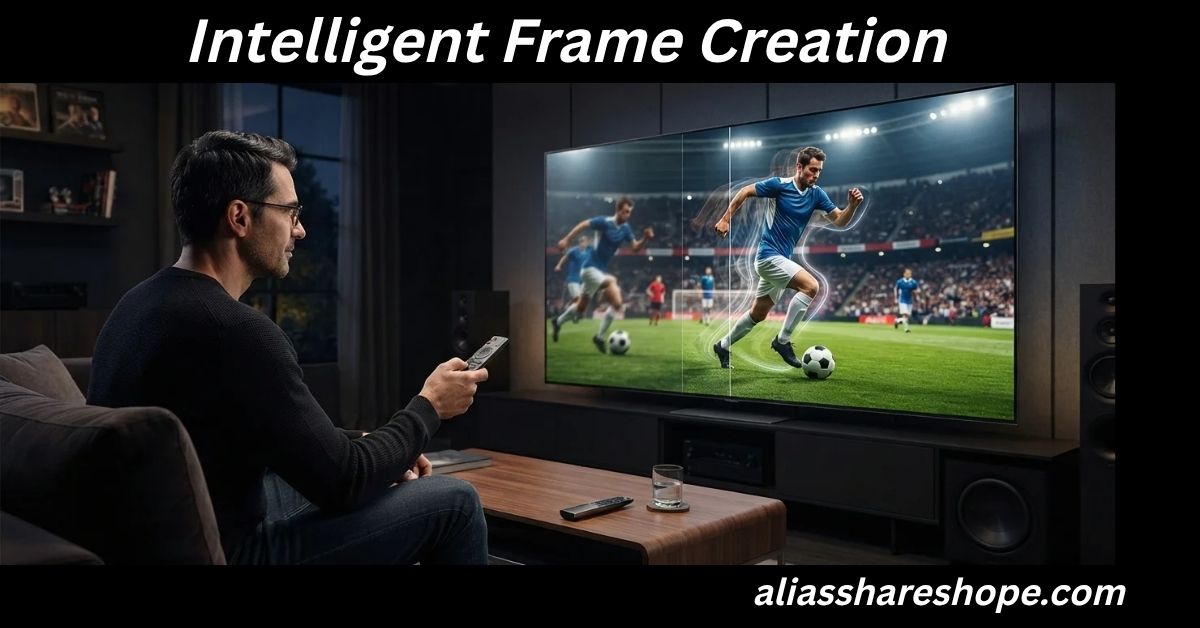
Intelligent Frame Creation, often shortened to IFC, is a television image-processing feature designed to make moving pictures look smoother and clearer. It works by analyzing consecutive video frames and creating additional frames between them. The result can be smoother motion, especially during sports, action scenes, camera pans, and other fast-moving content.
The technology is particularly associated with Panasonic televisions, although similar systems are available from many TV manufacturers under different names. Depending on the TV model, software version, and selected picture mode, Intelligent Frame Creation may have several strength levels or related motion-processing settings.
For viewers, IFC can be useful, but it is not always the best choice. Some people prefer very smooth motion, while others want movies and television shows to retain their original cinematic appearance. Understanding how Intelligent Frame Creation works makes it easier to choose the right setting for different types of content.
What Is Intelligent Frame Creation?
Intelligent Frame Creation is a motion-processing technology that analyzes video and generates intermediate frames to make movement appear smoother.
A normal video contains a sequence of individual frames. When a television displays those frames one after another, your eyes perceive them as continuous motion. If the source has a relatively low frame rate, fast movement can appear less smooth.
Intelligent Frame Creation attempts to improve this by estimating what should appear between existing frames.
For example, imagine a video containing these frames:
- Frame A: A car is on the left side of the screen.
- Frame B: The car has moved toward the center.
- Frame C: The car is on the right side.
Instead of displaying only A, B, and C, the television can estimate an additional frame between A and B and another between B and C.
This process is commonly called frame interpolation or motion interpolation.
The main goals are to:
- Reduce perceived motion blur
- Improve motion smoothness
- Make fast-moving objects easier to follow
- Improve the appearance of sports
- Smooth camera movement
- Reduce some forms of judder
- Make lower-frame-rate content appear more fluid
However, the process involves prediction. The television does not actually know what happened between two frames. It estimates the missing visual information using image-processing algorithms.
How Does Intelligent Frame Creation Work?
The basic concept behind Intelligent Frame Creation is easier to understand when you think about motion as a series of snapshots.
A video camera records individual images at a particular frame rate. A television then displays those images rapidly. When the content contains fast movement, there can be a noticeable difference between one frame and the next.
The TV’s processor compares neighboring frames and looks for movement.
It may examine:
- Objects
- Edges
- Backgrounds
- Faces
- Text
- Camera movement
- Changes in brightness
- Object direction
- Approximate object speed
The processor then estimates where moving objects should appear in an intermediate frame.
This new frame is inserted between the original frames.
The result is smoother perceived movement.
A Simple Example of Frame Interpolation
Suppose a basketball player moves from position 1 to position 3.
Without interpolation:
Position 1 → Position 3
With frame interpolation:
Position 1 → Estimated Position 2 → Position 3
The second position is not present in the original source video. The television creates it.
This is why Intelligent Frame Creation is fundamentally different from simply increasing a TV’s refresh rate.
Intelligent Frame Creation vs Refresh Rate
These two terms are often confused.
Refresh rate describes how frequently a television can update its display. It is commonly expressed in hertz, or Hz.
A 120 Hz display can refresh up to 120 times per second.
Intelligent Frame Creation, on the other hand, is an image-processing function. It creates or modifies visual frames before they are displayed.
A TV can therefore have:
- A high refresh rate without aggressive motion interpolation
- Motion interpolation on a high-refresh-rate display
- Motion processing that works differently depending on the input signal
- A combination of several motion technologies
This distinction is important because buying a TV with a high refresh rate does not automatically mean that it will produce the same appearance as strong frame interpolation.
Why Do TVs Use Intelligent Frame Creation?
The main reason is motion quality.
Television manufacturers want moving images to look clear and smooth. Modern displays can reveal motion problems that may have been less obvious on older display technologies.
Also Read: Plangud: Meaning, Uses, Digital Planning, and Productivity Guide
Large screens can also make motion artifacts easier to notice.
Intelligent Frame Creation can be especially useful when watching:
- Football
- Basketball
- Baseball
- Hockey
- Soccer
- Motorsports
- Nature documentaries
- Action movies
- Live television
- News broadcasts
- Video games in certain situations
Sports are a particularly common use case because cameras frequently move quickly and objects can travel across the screen.
A suitable motion-processing setting may make it easier to follow a rapidly moving ball or player.
What Does Intelligent Frame Creation Do to Movies?
Movies are an interesting case because smoother is not always considered better.
Most traditional film content has a cinematic motion appearance. If a television adds too many artificial frames, the movie may look unusually smooth.
This effect is often called the “soap opera effect.”
The term describes the appearance created when cinematic content looks more like inexpensive live video or television programming.
Some viewers enjoy this effect. Others strongly prefer the original film-like presentation.
For that reason, many TV owners choose lower motion-processing settings when watching movies.
What Is the Soap Opera Effect?
The soap opera effect is a visual appearance caused by strong motion interpolation.
Traditional movies often have a particular motion texture. When a TV inserts many additional frames, movement can become extremely smooth.
The image may then appear:
- More like live television
- More realistic in motion
- Less cinematic
- Very fluid
- Artificial to some viewers
The name comes from the fact that daytime television dramas were historically associated with video-based production and a different motion appearance than film.
Importantly, the soap opera effect is not necessarily a technical failure. It is largely a matter of preference.
A viewer who wants very smooth movement may consider it an improvement. A viewer who wants a traditional cinematic presentation may consider it distracting.
Intelligent Frame Creation Settings Explained
Many televisions provide multiple levels of motion processing.
The exact names and behavior vary by model, but settings may include options such as:
- Off
- Low
- Medium
- High
- Custom
- User-defined motion settings
A low setting generally applies less processing.
A high setting generally applies more aggressive motion interpolation.
A custom setting may allow separate control over different aspects of motion processing.
Because the exact implementation differs between television models, users should check the settings menu and manual for their specific TV.
Intelligent Frame Creation Low vs High
The difference between low and high IFC settings is mainly the amount and strength of motion processing.
Low Intelligent Frame Creation
A low setting may provide:
- Mild motion smoothing
- Less noticeable artificial movement
- Fewer interpolation artifacts
- A more natural appearance
- Some reduction in motion blur and judder
This can be a reasonable compromise for general television viewing.
High Intelligent Frame Creation
A high setting may provide:
- Very smooth motion
- Stronger interpolation
- More noticeable changes to the original image
- Greater risk of visual artifacts
- A stronger soap opera effect
High settings can appeal to people who prioritize smooth motion over cinematic appearance.
What Are Motion Artifacts?
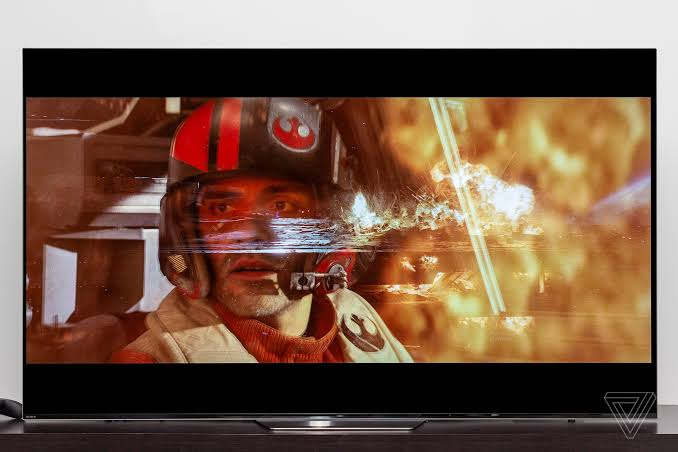
Motion artifacts are unwanted visual errors created when a television processes moving images.
Frame interpolation is based on predictions. When those predictions are incorrect, the TV can create an image that does not perfectly represent the original scene.
Possible artifacts include:
- Objects appearing to warp
- Unusual outlines
- Flickering around moving objects
- Distorted backgrounds
- Double images
- Glitches around fast-moving subjects
- Unnatural movement
- Small areas of visual instability
These problems are more likely in complicated scenes.
For example, imagine a person walking quickly in front of a detailed fence. The TV has to determine which pixels belong to the person and which belong to the fence.
If the algorithm incorrectly interprets the movement, the intermediate frame may contain visual errors.
Why Does Intelligent Frame Creation Sometimes Look Strange?
The fundamental challenge is prediction.
A television receives real frames but must estimate information that was never captured.
Consider two images of a bird flying across a complicated landscape. Between those frames, the TV has to estimate:
- Where the bird moved
- How its wings moved
- How the background should remain stable
- How shadows changed
- How objects overlap
- Whether the camera itself moved
This is a difficult computer-vision problem.
Modern processors can perform sophisticated analysis, but no interpolation algorithm is perfect in every scene.
Intelligent Frame Creation and Artificial Intelligence
Modern television processors increasingly use advanced image analysis and, in some products, machine-learning techniques.
However, it is important not to assume that every television feature labeled as “AI” works in the same way.
Some systems use trained models or advanced algorithms to identify objects and motion. Others use traditional image-processing techniques.
The phrase “AI-powered” can therefore describe several different approaches.
When evaluating a TV, the practical question is more useful than the marketing label:
Does the motion processing produce the appearance you prefer?
Is Intelligent Frame Creation Good for Sports?
For many viewers, sports are one of the strongest use cases for motion interpolation.
Sports broadcasts often contain:
- Fast-moving players
- Rapid camera pans
- Balls moving across the screen
- Large areas of uniform color
- Fast cuts
- Repetitive camera movement
Motion smoothing can make these scenes appear more fluid.
However, excessive processing can introduce artifacts around players, equipment, or the playing surface.
A moderate setting can therefore be useful for viewers who want smoother sports without excessive processing.
Intelligent Frame Creation for Football
Football broadcasts contain many examples where motion processing can affect viewing quality.
When the camera follows a running player or rapidly moves across the field, motion interpolation may make the movement appear smoother.
It can also help during:
- Long passes
- Running plays
- Fast camera pans
- Replays
- Close-up action
However, the best setting depends on the broadcast frame rate, resolution, television model, and viewer preference.
Intelligent Frame Creation for Gaming
Gaming is different from movie and television viewing.
A television may need to process the image quickly so that player actions appear responsive.
Heavy image processing can sometimes contribute to increased input latency, depending on how the TV implements its processing.
For competitive gaming, players generally prioritize low latency.
This is why many televisions include a Game Mode.
Game Mode may reduce or disable certain image-processing features to improve responsiveness.
Whether Intelligent Frame Creation is available or useful during gaming depends on the TV, game, input signal, and processing mode.
For competitive games, testing the television with the actual console or PC is more useful than relying only on a feature name.
Intelligent Frame Creation and Input Lag
Input lag refers to the delay between an action and the corresponding image appearing on the display.
For example, when you press a controller button, there is a short period before the resulting action is visible.
Heavy image processing can contribute to this delay.
Motion interpolation is one type of processing that may affect latency.
For everyday TV watching, a small delay is usually not important.
For competitive gaming, however, even small differences can matter.
This is one reason gaming-oriented picture modes often reduce advanced processing.
Intelligent Frame Creation and 24p Movies
Many movies are produced at approximately 24 frames per second.
Displaying this material correctly can be challenging because television refresh rates and source frame rates do not always match evenly.
Televisions may use techniques such as 3:2 pulldown or other cadence processing to display film content.
Motion processing can also change how the viewer perceives this material.
People who want a traditional movie presentation often prefer picture modes designed to preserve the original cinematic cadence rather than applying strong interpolation.
What Is Judder?
Judder is an uneven appearance in motion that can occur when content with one frame rate is displayed on a screen operating at another timing pattern.
It can be especially noticeable during slow camera pans.
For example, a camera slowly moving across a city skyline may reveal uneven movement in buildings or other stationary objects.
Motion-processing systems can reduce the perception of some types of judder.
However, reducing judder does not always mean that the picture will look more natural.
The right choice depends on what the viewer wants to preserve.
Intelligent Frame Creation vs Motion Smoothing
The terms motion smoothing, motion interpolation, and frame interpolation are often used broadly.
They generally describe technologies that analyze movement and modify the sequence of displayed frames.
Intelligent Frame Creation is a specific name used by Panasonic for its motion-processing technology.
Other television brands use different names.
Examples of competing terminology include:
- MotionFlow
- TruMotion
- Auto Motion Plus
- Motion Enhancement
- MEMC
- Motion Xcelerator
- Motion smoothing
Although these technologies have similar goals, their algorithms and implementation can differ significantly.
The name alone does not tell you exactly how a system will look.
Why Different TVs Produce Different Motion Results
Two televisions can both offer motion interpolation and still produce noticeably different results.
The difference can come from:
- Processor performance
- Motion-detection algorithms
- Panel technology
- Refresh rate
- Picture mode
- Source frame rate
- Input resolution
- Software
- Manufacturer tuning
- User settings
A premium TV may have more sophisticated processing, but even expensive models can produce artifacts in difficult scenes.
This is why professional reviews often test motion using several types of content rather than relying on specifications alone.
Intelligent Frame Creation on Panasonic TVs
The term Intelligent Frame Creation is strongly associated with Panasonic television picture settings.
Panasonic has used IFC as part of its television motion-processing system across different generations of displays.
Depending on the model, IFC may interact with other motion settings and picture modes.
Because Panasonic television menus have changed over time, users should not assume that every model provides identical IFC controls.
A current television may also have different settings from an older Panasonic plasma, LED, OLED, or other display.
Does Every Panasonic TV Have Intelligent Frame Creation?
No.
The availability and implementation of Intelligent Frame Creation depend on the specific model, market, generation, firmware, and display platform.
Some Panasonic televisions offer IFC settings, while other models may use different processing options.
If you are checking a specific television, the model number is important.
Searching only for “Panasonic IFC” without the exact model can lead to incorrect assumptions.
Can Intelligent Frame Creation Be Turned Off?
On televisions that provide the feature, users can generally adjust or disable the motion-processing function through the picture settings.
The exact menu path varies.
A typical process may involve:
- Open the TV’s Settings menu.
- Select Picture.
- Open Advanced or Motion settings.
- Find Intelligent Frame Creation.
- Choose Off or a lower setting.
- Test several scenes.
The exact terminology may be different on your TV.
If you cannot find the setting, consult the manual for the exact model.
Should You Turn Intelligent Frame Creation Off?
There is no universal answer.
The better approach is to choose the setting according to the type of content and the appearance you prefer.
You may prefer lower processing when watching:
- Movies
- Prestige television dramas
- Cinematic documentaries
- Film-based content
You may prefer stronger processing when watching:
- Sports
- Live television
- Fast action
- Certain reality programs
- Content where smooth movement is your priority
For gaming, Game Mode may be more important than IFC because responsiveness can be a higher priority.
A Practical Intelligent Frame Creation Setup
Instead of choosing one setting for everything, consider using different picture modes for different activities.
For movies:
- Start with IFC Off or Low.
- Watch a slow camera pan.
- Look for natural movement.
- Check whether faces and backgrounds remain stable.
For sports:
- Start with Low or Medium.
- Watch fast camera movement.
- Look around players and the ball for artifacts.
- Increase the setting only if the result looks better to you.
For gaming:
- Start with Game Mode.
- Check input response.
- Avoid unnecessary processing if responsiveness is important.
This approach is more useful than assuming that maximum smoothing is always best.
How to Test Intelligent Frame Creation Properly
Testing motion settings requires more than watching a single scene.
Try several types of content.
Test 1: Slow Camera Pan
Find a scene where a camera slowly moves horizontally.
Look for:
- Smooth movement
- Uneven motion
- Stuttering
- Excessive smoothing
Test 2: Fast Action
Watch a sports replay or action sequence.
Look for:
- Object clarity
- Edge distortion
- Ghosting
- Warping
- Double images
Test 3: Faces
Watch people moving across the screen.
Check whether:
- Faces remain natural
- Facial features distort
- Hair or hands show artifacts
Test 4: Detailed Backgrounds
Look at fences, buildings, trees, or patterned surfaces.
These areas can reveal interpolation problems.
Test 5: Subtitles and Text
Text moving across a screen can expose processing problems.
Check whether letters remain stable and readable.
Does Intelligent Frame Creation Reduce Motion Blur?
It can reduce perceived motion blur, but the answer depends on the source, display technology, processing settings, and specific TV.
Motion blur can have several causes.
Some blur comes from the source content itself.
Other blur may be associated with how the display holds each frame.
Motion interpolation can create additional intermediate images, which may make movement appear clearer.
However, it does not magically eliminate every type of blur.
This distinction is important because “motion blur reduction” is sometimes used as a broad marketing term.
Intelligent Frame Creation on OLED TVs
OLED televisions have very fast pixel response times.
This can provide excellent clarity during rapid transitions.
However, fast response does not mean that all motion will automatically appear perfectly smooth.
Source frame rate and display behavior still matter.
ALso Read: Glossywise Com: The Multi-Niche Content Platform
OLED televisions may also reveal certain forms of motion characteristics more clearly because their pixels transition quickly.
Motion interpolation can therefore remain relevant on OLED displays.
The key point is that pixel response time and frame interpolation solve different problems.
Intelligent Frame Creation on LED and LCD TVs
LED TVs generally use LCD panels with an LED backlight.
Their motion appearance depends on several factors, including:
- Panel response time
- Refresh rate
- Backlight behavior
- Processing
- Source content
Motion interpolation can make movement appear smoother on these displays, but again, the exact effect varies by model.
Is Intelligent Frame Creation Necessary on a 120 Hz TV?
Not necessarily.
A 120 Hz panel can display more refresh cycles than a 60 Hz panel, but that does not mean that every source contains 120 unique frames per second.
A 24 fps movie still starts as 24 frames per second.
A 30 fps program still starts as 30 frames per second.
A 60 fps sports broadcast may contain 60 frames per second.
Motion interpolation can create additional frames when enabled, but the television’s native refresh capability and its image-processing behavior are separate concepts.
Common Misunderstandings About Intelligent Frame Creation
Several misconceptions appear frequently when people discuss TV motion technology.
More Frames Always Mean Better Picture Quality
Not necessarily.
Additional generated frames can improve smoothness, but they can also change the intended appearance or introduce artifacts.
High IFC Is Always Better
No.
High processing may look excellent for one type of content and distracting for another.
IFC Increases the Original Video’s Frame Rate
Not exactly.
It generates additional displayed frames through processing. The original source file or broadcast remains unchanged.
Motion Interpolation Is the Same as a Higher Refresh Rate
No.
Refresh rate describes display capability. Interpolation describes image processing.
Turning IFC Off Makes a TV Bad
No.
Some viewers deliberately disable motion interpolation because they prefer the original motion appearance.
Intelligent Frame Creation and Picture Quality
Picture quality is not determined by one setting.
Important factors include:
- Resolution
- Contrast
- Black level
- HDR performance
- Color accuracy
- Peak brightness
- Viewing angle
- Panel technology
- Source quality
- Upscaling
- Motion handling
- Input latency
Intelligent Frame Creation is only one part of this larger system.
A television with excellent motion processing can still have weaknesses elsewhere, while a television with minimal motion processing may deliver outstanding image quality for viewers who prefer natural motion.
How Streaming Services Affect Motion Processing
Streaming services deliver content in different frame rates and formats.
Movies, television shows, live events, and sports can have different motion characteristics.
Compression can also introduce additional visual problems.
A TV’s motion processor receives the final video signal and analyzes it, so the quality of the input can influence the result.
Poor-quality or highly compressed content may be harder for the television to process cleanly.
This is another reason to evaluate motion settings using high-quality content.
Intelligent Frame Creation and 4K Content
4K resolution provides much more image detail than older HD formats.
That extra detail can make motion processing both more impressive and more revealing.
When interpolation works well, movement can look extremely clear.
When it fails, artifacts may also be easier to notice.
This is particularly true on large screens viewed from relatively close distances.
Does Intelligent Frame Creation Improve Resolution?
No.
IFC is primarily a motion-processing technology.
It does not turn a 1080p source into genuine native 4K resolution.
A television may use separate upscaling technology to increase the apparent detail of lower-resolution material.
Therefore, motion interpolation and upscaling should be considered separate processes.
Intelligent Frame Creation and HDR
HDR, or high dynamic range, affects brightness, contrast, and color reproduction.
Motion processing affects how movement is presented.
These technologies address different aspects of picture quality.
A TV may apply both at the same time, but IFC does not itself create HDR.
When evaluating a television, it is useful to treat HDR performance and motion performance as separate characteristics.
Can Intelligent Frame Creation Cause a Soap Opera Effect?
Yes.
Strong motion interpolation is one of the main ways that the soap opera effect can occur.
If you notice that movies look unusually smooth or resemble live video, try reducing IFC.
A lower setting may provide a middle ground between:
- Completely natural film motion
- Very strong artificial smoothness
How to Choose the Right IFC Setting
The best setting is ultimately based on your viewing priorities.
A useful decision framework is:
Choose Off if:
You prefer the original cinematic appearance and dislike artificial smoothing.
Choose Low if:
You want some motion improvement without making the effect too obvious.
Choose Medium if:
You want noticeably smoother movement for general television viewing.
Choose High if:
You strongly prefer maximum smoothness and do not mind a more processed appearance.
These categories are general. Your TV may use different levels or behave differently.
Intelligent Frame Creation for Different Viewers
Different households can reasonably prefer different settings.
A sports fan may want extremely smooth motion.
A movie enthusiast may prefer little or no interpolation.
A casual television viewer may want a moderate setting.
A competitive gamer may prioritize low input latency.
This illustrates an important point: television picture quality is partly subjective.
Technical measurements are useful, but the final setting should match the viewer’s actual use.
Advantages of Intelligent Frame Creation
The technology can provide several benefits.
Smoother Motion
The primary benefit is more fluid movement.
Better Sports Viewing
Fast action can become easier to follow.
Reduced Perceived Judder
Some uneven motion may become less noticeable.
Improved Motion Clarity
Moving objects may appear easier to track.
Flexible Viewing
Different processing levels let viewers customize the experience.
Disadvantages of Intelligent Frame Creation
There are also trade-offs.
Soap Opera Effect
Movies may appear less cinematic.
Interpolation Artifacts
Incorrect motion estimation can create visual errors.
Processing Latency
Depending on the TV, additional processing may affect responsiveness.
Personal Preference
Some viewers simply do not like motion smoothing.
Inconsistent Results
A setting that works well with one video may produce artifacts in another.
Intelligent Frame Creation: Pros and Cons
| Feature | Potential Benefit | Potential Drawback |
| Motion smoothing | More fluid movement | Can look artificial |
| Sports viewing | Easier tracking of fast action | May create player-edge artifacts |
| Movies | Can reduce some judder | Can create soap opera effect |
| Live TV | Smooth camera movement | May over-process some scenes |
| Gaming | Potentially smoother motion | Processing may increase latency |
| High settings | Maximum smoothness | More visible artifacts |
| Low settings | Natural compromise | Less motion improvement |
Is Intelligent Frame Creation Worth Using?
For many viewers, IFC is worth experimenting with because it provides control over how motion looks.
The most important point is not whether the feature is universally good or bad.
Instead, consider:
- What content do you watch most?
- Do you prefer cinematic or ultra-smooth motion?
- Are you sensitive to motion artifacts?
- Do you play competitive games?
- Does your TV provide separate picture modes?
- Which setting looks most natural to you?
A five-minute comparison using your own favorite content can be more informative than a generic recommendation.
The Future of TV Motion Processing
Television motion processing continues to evolve.
Modern processors have more computing power and can analyze increasingly complex scenes.
Future systems may become better at distinguishing:
- Foreground objects
- Background movement
- Camera movement
- Reflections
- Shadows
- Fine details
- Complex object interactions
Machine learning may also help television processors make more accurate motion predictions.
However, the fundamental challenge remains: the TV is trying to estimate information that was not captured by the original camera.
Better processing can reduce errors, but it cannot remove the underlying trade-off completely.
How Consumers Should Evaluate Motion Processing
When buying a new television, avoid judging motion quality solely by the manufacturer’s feature name.
Also Read: Newslikeyou.com: The Multi-Topic Publishing Website
Instead, consider independent testing and real-world viewing.
Look for information about:
- Motion interpolation performance
- Judder handling
- Response time
- Input lag
- Refresh rate
- Film cadence
- Sports performance
- Gaming performance
Also remember that manufacturers may change processing behavior between model generations.
A television with a familiar feature name can behave differently from an older model.
Frequently Asked Questions About Intelligent Frame Creation
1. Does Intelligent Frame Creation work with every type of video input?
No. Its availability and behavior can depend on the source, signal format, picture mode, and television model. Some inputs or modes may limit certain processing features.
2. Can Intelligent Frame Creation damage a television screen?
No. Motion interpolation is software and image processing. It does not physically damage the panel. Like other picture-processing features, it changes how images are calculated and displayed.
3. Does Intelligent Frame Creation consume more electricity?
The additional processing requires computational resources, but the practical effect on total television power consumption varies by model and setting. Display brightness and panel operation generally have a much larger influence on overall power use.
4. Can IFC be different for different HDMI devices?
Yes. Picture settings can sometimes be stored separately for different inputs or picture modes. The exact behavior depends on the television’s software and model.
5. Why does Intelligent Frame Creation sometimes work well in one scene but badly in another?
Motion interpolation relies on predicting movement. Simple movement is relatively easy to analyze, while scenes with overlapping objects, rapid cuts, complex backgrounds, or unusual camera movement are harder. As a result, artifacts can appear inconsistently.
Conclusion
Intelligent Frame Creation is a sophisticated motion-smoothing technology designed to make television movement appear more fluid. It does this by analyzing existing frames and generating estimated intermediate frames.
The technology can be useful for sports, live television, action content, and viewers who prefer very smooth motion. At the same time, strong processing can produce a soap opera effect or motion artifacts, particularly in complex scenes.
There is no single Intelligent Frame Creation setting that is perfect for everyone. Movies, sports, television programs, and games can benefit from different approaches. The most practical strategy is to test Off, Low, Medium, and High settings using the content you actually watch.
The larger lesson is that modern TV picture processing involves trade-offs. More processing does not automatically mean better picture quality. The best configuration is the one that provides the motion appearance, responsiveness, and cinematic character you personally want while avoiding distracting artifacts.