Tracqueur: Meaning, Tracking Technology, Uses, Privacy, and Safety
Tracqueur is a term that is increasingly associated with tracking, location monitoring, and technology used to find or follow people, vehicles, animals, devices, or objects. In simple terms, a tracqueur can be understood as a tracker or tracking tool.
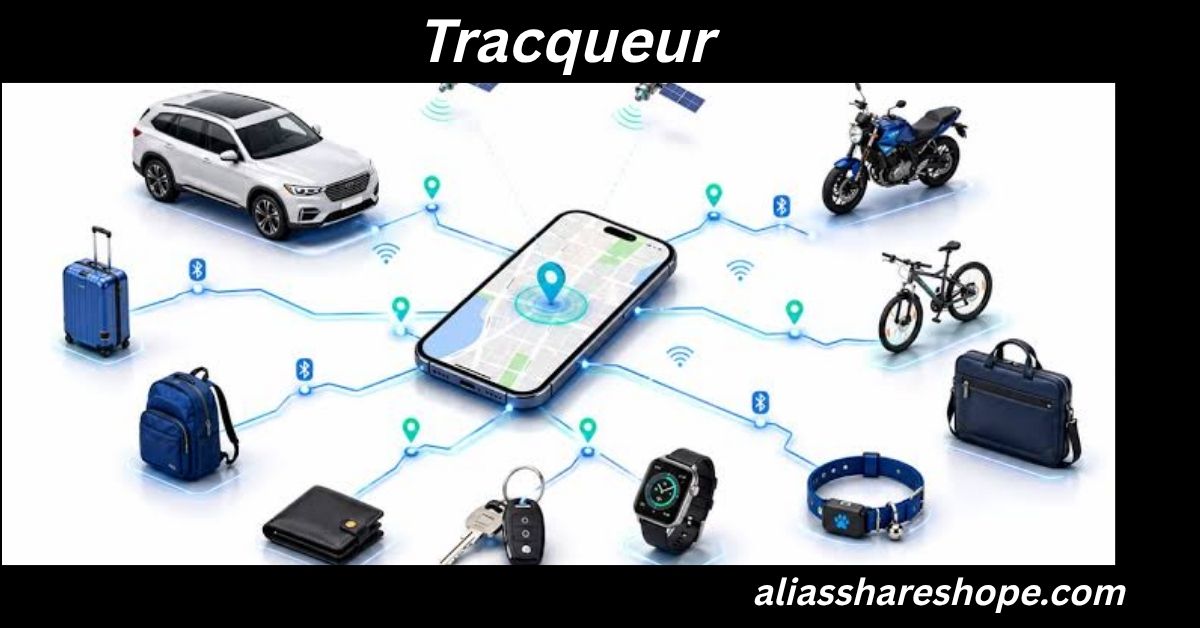
The term can be confusing because “Tracqueur” does not describe one universal device or one specific technology. Depending on the context, it may refer to a GPS tracker, vehicle tracking system, Bluetooth tracker, pet tracker, asset monitoring device, fitness tracker, or software that records digital activity.
There is also a language issue. The established French word “traqueur” is closely related to the idea of a tracker or someone who tracks something. In technology discussions, French speakers may also encounter terms such as “traceur GPS” for a GPS tracking device. The spelling “Tracqueur” appears online as a variation, keyword, or name associated with tracking.
For that reason, understanding the technology behind the word is more useful than treating Tracqueur as a single product.
Modern tracking can be helpful. A tracker can help a person find lost luggage, monitor a vehicle, locate equipment, find a pet, or manage a business fleet. At the same time, tracking technology can create serious privacy concerns when location or activity data is collected without clear knowledge or permission.
This guide explains what Tracqueur means, how tracking systems work, the different types of trackers, common uses, benefits, limitations, privacy risks, legal considerations, and practical safety tips.
What Does Tracqueur Mean?
Tracqueur is generally understood as a tracking-related term.
The closest simple English word is “tracker.” A tracker is something that helps locate, follow, measure, or record the movement or activity of a target.
The target could be:
- A person
- A vehicle
- A pet
- A suitcase
- A phone
- A bicycle
- A piece of business equipment
- A shipment
- A fitness activity
- A website visitor
- A digital device
The exact meaning depends on the situation.
For example, when someone talks about a Tracqueur for a car, they may mean a GPS vehicle tracker. When someone talks about a tracker for keys, they may mean a small Bluetooth tag. When a website talks about online tracking, it may mean cookies, advertising identifiers, pixels, or software development kits that collect information about digital activity.
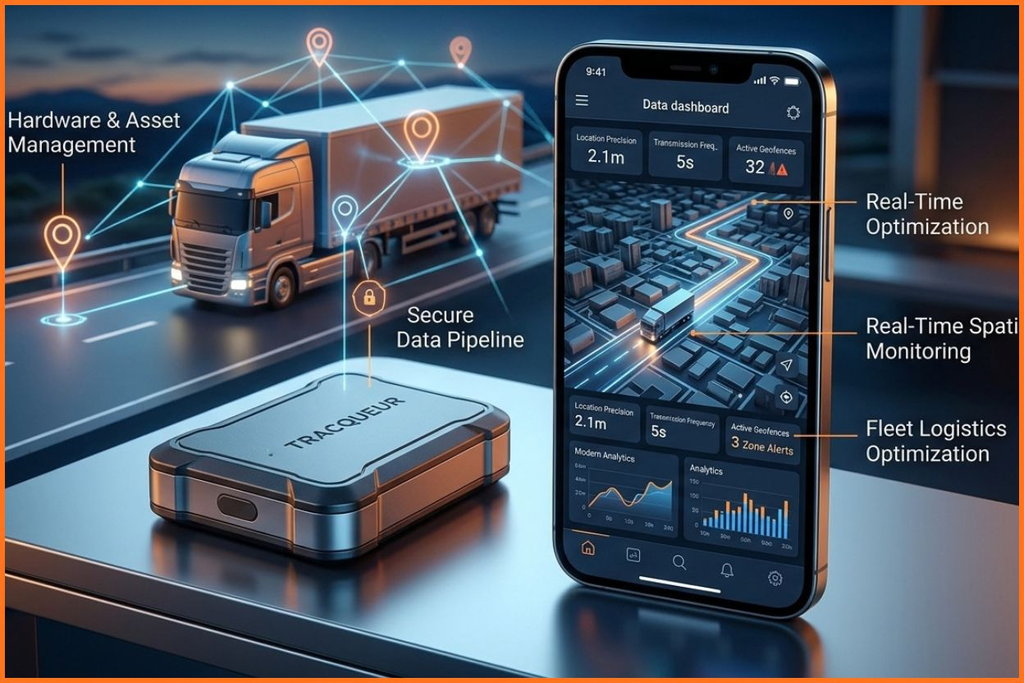
This is why the keyword Tracqueur should not automatically be treated as the name of one particular product.
Tracqueur vs. Traqueur vs. Tracker
One of the most important things to understand is the spelling.
“Tracker” is the common English term.
“Traqueur” is a French word associated with tracking or pursuing something.
“Tracqueur” is a spelling that appears online and is often connected with tracking-related searches and technology.
These terms may appear together in search results, but they should not automatically be treated as exact technical equivalents.
For someone searching online, this distinction can make a big difference. A search for Tracqueur might produce language information, GPS technology, tracking devices, software, or a website using the word as a name.
The safest approach is to examine the context and determine what type of tracker is actually being discussed.
Is Tracqueur a GPS Tracker?
Not necessarily.
A GPS tracker is one type of tracking technology, but tracking does not always require GPS.
Different trackers can use different technologies, including:
- GPS
- Cellular networks
- Bluetooth
- Wi-Fi
- Satellite communication
- Motion sensors
- Smartphone networks
- Internet connections
- Device identifiers
- Software-based tracking systems
A GPS tracker usually determines its position using signals from navigation satellites. The device can then use another communication method, such as a cellular connection, to send its location to an application or online dashboard.
A Bluetooth tracker works differently. It is designed mainly for nearby objects and communicates over a short-range wireless connection.
A web tracker is different again. It may collect information about a user’s interaction with a website rather than determining the physical location of an object.
Therefore, the word Tracqueur describes the general concept of tracking much better than it describes a specific technical design.
How Does a Tracqueur Work?
The basic tracking process is relatively simple.
First, a tracker collects some type of information.
Second, the information is processed or transmitted.
Third, the user receives the information through an application, website, dashboard, map, notification, or another interface.
For a GPS tracking device, the process may look like this:
- The tracker receives signals from navigation satellites.
- The device calculates its approximate position.
- The device records the location.
- A communication network sends the information to a server.
- The server processes the information.
- The user sees the location through an app or web dashboard.
Not every tracker follows this exact process.
A Bluetooth tracker may depend on nearby smartphones. A fitness tracker may use sensors to measure movement. A vehicle tracking system may combine GPS, cellular communication, engine information, and other vehicle data.
The important lesson is that tracking has several layers. The device must collect information, a communication method may be required to transmit it, and software usually turns the raw information into something the user can understand.
How GPS Tracking Technology Works
GPS stands for Global Positioning System.
GPS is a U.S.-owned positioning, navigation, and timing system. GPS receivers use signals from satellites to calculate position and time.
A GPS receiver does not normally need a cellular connection simply to calculate its position. However, a tracker that needs to send its location to someone remotely usually needs some form of communication.
This distinction is important.
For example, a GPS device could determine that it is in a particular area without having a cellular SIM card. But if the owner wants to open a phone app and see that location from hundreds of miles away, the device needs a way to communicate the information.
Depending on the product, that communication may use cellular networks, Wi-Fi, satellite communications, or another technology.
What Are the Main Types of Tracqueur Technology?
Because Tracqueur is a broad tracking-related term, several types of trackers may fall under its general meaning.
GPS Trackers
GPS trackers are designed to determine geographic location.
They are commonly used for:
- Cars
- Trucks
- Motorcycles
- Boats
- Equipment
- Pets
- Outdoor activities
- Fleet management
Some GPS trackers provide frequent location updates, while others report less often to save battery power.
Bluetooth Trackers
Bluetooth trackers are small devices designed primarily for finding nearby belongings.
People may attach them to:
- Keys
- Wallets
- Bags
- Backpacks
- Luggage
- Bicycles
- Other personal items
Their range is usually much shorter than that of a cellular GPS tracker.
However, some modern Bluetooth tracking networks can use nearby participating devices to help determine the approximate location of a lost item.
Vehicle Trackers
Vehicle tracking systems can provide more than location.
Depending on the product, a vehicle tracking system may record:
- Location
- Speed
- Travel history
- Driving events
- Vehicle movement
- Maintenance information
- Idle time
- Route information
Businesses may use these systems for fleet management, while individual vehicle owners may use them for theft recovery or vehicle monitoring.
Pet Trackers
Pet tracking devices can help owners locate dogs and cats.
Many pet trackers combine GPS with cellular communication. Some products also include activity monitoring.
The main advantage is that a pet can potentially be located over a large area instead of only within Bluetooth range.
Battery life and cellular coverage are important factors when choosing this type of tracker.
Asset Trackers
Asset tracking is common in business and industry.
Companies may use tracking technology for:
- Construction equipment
- Shipping containers
- Tools
- Machinery
- Inventory
- High-value equipment
- Rental assets
Asset trackers can help businesses understand where important items are and whether they have moved unexpectedly.
Fitness Trackers
Fitness trackers are another form of tracking technology.
They may monitor:
- Steps
- Movement
- Exercise
- Heart rate
- Sleep-related measurements
- Workout duration
- Activity levels
These devices are different from location trackers, although some products combine both functions.
Users should always understand what health and activity information a device collects and how that information is stored or shared.
Digital and Web Trackers
Not all tracking involves physical location.
Websites and applications may use tracking technologies to understand how visitors interact with digital services.
Examples include:
- Cookies
- Pixels
- Advertising identifiers
- Analytics tools
- Software development kits
- Device identifiers
- Session information
This type of tracking may be used for analytics, advertising, personalization, security, or service improvement.
Digital tracking is one reason the word “tracker” can mean something very different in a cybersecurity or privacy discussion than it does in a vehicle tracking discussion.
Common Uses of Tracqueur and Tracking Technology
Tracking technology has many legitimate uses.
Finding Lost Items
A small tracker can make it easier to locate keys, bags, luggage, or other belongings.
This is one of the simplest consumer uses of tracking technology.
Instead of searching an entire house or airport, a person may use an application to determine where the tracked item was last detected.
Vehicle Security
Vehicle trackers can help owners monitor a vehicle’s location.
If a vehicle is stolen, location information may potentially assist recovery. The effectiveness of this depends on the tracker, its battery, network coverage, installation, and other conditions.
Fleet Management
Businesses with multiple vehicles can use tracking systems to manage operations.
A fleet manager may use location information to understand routes, delivery progress, vehicle use, and operational efficiency.
Tracking can also help companies identify unusual vehicle movement or delays.
Pet Safety
Pet trackers can be useful for animals that sometimes escape from a yard or become separated from their owners.
A GPS-enabled pet tracker can be especially useful when the animal travels beyond Bluetooth range.
Logistics
Shipping and logistics companies need to know where goods and vehicles are located.
Tracking systems can help businesses monitor shipments and coordinate transportation.
This can improve visibility across a supply chain.
Equipment Management
Companies may have thousands of dollars invested in equipment.
Tracking technology can help identify where equipment is located and whether it is being moved between job sites.
Personal Organization
Consumers can use tracking technology to reduce the stress of losing important belongings.
A tracker attached to luggage, keys, or a backpack can provide useful information when an item goes missing.
Benefits of Using a Tracqueur
Tracking technology can offer several practical benefits.
Better Visibility
The biggest advantage is visibility.
Without a tracker, a person may only know that an object is missing. With a tracker, they may have additional information about its last known location.
Theft Recovery Assistance
A vehicle or asset tracker may provide information that can help after theft.
However, users should never place themselves in danger by attempting to recover stolen property personally. Law enforcement should be contacted when appropriate.
Improved Fleet Management
Businesses can use tracking data to understand vehicle movement and improve planning.
This may help with delivery coordination, scheduling, maintenance planning, and asset use.
Reduced Search Time
A tracker can save time when locating frequently misplaced belongings.
Better Operational Information
For companies, tracking data can provide information that is difficult to obtain manually.
The value comes not simply from knowing where something is, but from understanding patterns over time.
What Are the Limitations of Tracqueur Technology?
Tracking devices are useful, but they are not perfect.
GPS Accuracy Can Vary
GPS performance can be affected by buildings, trees, terrain, atmospheric conditions, and other factors.
A device may therefore show an approximate location rather than an exact physical position.
Cellular Coverage Matters
A cellular tracker may work poorly in areas with limited network coverage.
This is especially important for rural locations, mountains, underground areas, and remote regions.
Battery Life Is Important
Small trackers have limited battery capacity.
Frequent location updates can consume more power.
A tracker that reports every few seconds may require more charging than a device that reports only occasionally.
Bluetooth Has Limited Range
Bluetooth trackers are generally designed for nearby detection.
They should not be treated as identical to long-range GPS trackers.
Tracking Data Can Be Delayed
Some systems do not provide truly continuous real-time information.
There may be delays caused by network connections, device settings, battery-saving modes, or server processing.
No Technology Is Perfect
A tracker should be viewed as a tool, not a guarantee.
Users should understand the conditions under which the device works and the conditions under which it may fail.
Tracqueur and Privacy: Why It Matters
Privacy is one of the most important parts of modern tracking technology.
A location history can reveal much more than where a device is.
Repeated location information may reveal patterns such as:
- Where someone lives
- Where someone works
- Where someone spends time
- Travel routines
- Frequently visited places
- Daily schedules
For this reason, location data can be highly sensitive.
The privacy issue applies to both physical trackers and digital tracking systems.
A person may knowingly attach a tracker to their own luggage. That is very different from secretly placing a tracking device on another person’s property.
Consent and ownership matter.
Can Someone Track Another Person Without Permission?
Tracking another person without their knowledge or permission can create serious legal and safety problems.
The exact law depends on the circumstances and jurisdiction.
A tracker attached to someone else’s vehicle or personal belongings can potentially be used for stalking, harassment, intimidation, or other harmful behavior.
Technology companies have recognized this risk.
Modern smartphone platforms include features designed to alert people when an unknown Bluetooth tracker appears to be traveling with them. These tools are intended to reduce unwanted tracking and help users identify potentially unknown devices.
If you believe an unknown tracker is following you, prioritize personal safety rather than confronting a person you suspect.
What Should You Do If You Find an Unknown Tracker?
If a tracker appears to be moving with you and you do not recognize it, take the situation seriously.
First, check whether the tracker could have a legitimate explanation.
For example, you might be:
- Borrowing someone else’s bag
- Traveling with a family member
- Using a shared vehicle
- Carrying an item that belongs to another person
If you cannot explain the tracker, review the information provided by your phone or tracking system.
Modern Android devices can provide unknown tracker alerts and tools for identifying certain nearby tracking devices. Apple devices also provide unwanted tracking notifications for supported devices.
If you feel unsafe, move to a safe location and consider contacting law enforcement or a trusted person.
Do not assume that disabling Bluetooth or location services on your phone automatically disables the tracker itself. A physical tracker may continue operating independently.
How to Protect Your Privacy From Tracking Technology
Consumers can take several simple steps to improve privacy.
Review App Permissions
Check which applications can access your location.
Ask yourself whether each application actually needs location access.
A weather application may reasonably need location information. A simple flashlight application may not.
Check Privacy Policies
Before using a tracking application, review its privacy information.
Look for details about:
- What information is collected
- Why it is collected
- How long it is stored
- Whether it is shared
- Whether third parties receive it
- How users can delete information
Use Strong Account Security
A tracker account can expose location information if someone gains access to it.
Use a strong, unique password.
Enable multifactor authentication when available.
Never share your account password simply because another person wants access to a tracker.
Update Devices
Security updates can improve the safety of smartphones, applications, and connected devices.
Keep tracker applications and smartphone operating systems updated.
Remove Unused Tracking Devices
Old devices that are still connected to accounts can create unnecessary privacy and security risks.
If you no longer use a tracker, remove it from your account and follow the manufacturer’s instructions for resetting or disposing of it.
Tracqueur and Data Security
Location data should be treated as sensitive information.
A company that stores location information must protect it from unauthorized access.
Consumers should therefore ask important questions before choosing a tracking service.
Does the company encrypt data?
Who can access the account?
Can the data be downloaded?
Can old location records be deleted?
How long are records retained?
Does the company share information with third parties?
What happens if the company experiences a security breach?
These questions are often more important than a device’s appearance or marketing claims.
How Businesses Can Use Tracking Responsibly
Businesses can benefit from tracking technology, but they also need clear policies.
For example, an employer using vehicle tracking should explain what is being tracked, why it is being tracked, who can access the information, and how long records are retained.
A clear policy can reduce confusion between legitimate business monitoring and excessive personal surveillance.
Businesses should also limit access to tracking data.
Not every employee needs access to every vehicle’s location history.
A useful principle is data minimization: collect the information that is reasonably necessary for the stated purpose instead of collecting everything simply because the technology allows it.
Tracking Employees: Important Considerations
Employee tracking can be a sensitive issue.
A company may have legitimate reasons to track company-owned vehicles or delivery vehicles.
However, employee monitoring can become more complicated when a company device or vehicle is used outside working hours.
Employers should consider applicable federal, state, and local laws, employment rules, privacy requirements, and company policies.
Because laws can differ across the United States, businesses should obtain qualified legal advice for specific workplace monitoring programs.
The general lesson is simple: tracking should have a clear purpose, reasonable limits, transparency, and appropriate security.
How to Choose a Tracking Device
If you are searching for a Tracqueur or tracker, start with your actual need.
Do not begin with the brand name.
Begin with the question: “What do I need to track?”
For Keys and Small Items
A Bluetooth tracker may be enough.
For a Car
A GPS vehicle tracker may be more appropriate.
For a Pet
Look for a pet tracker with suitable GPS coverage, battery life, and water resistance.
For Business Equipment
Consider an asset tracker designed for the size, location, and operating environment of the equipment.
For Remote Areas
Check whether cellular coverage is available. If not, a satellite-based solution may be worth considering.
For Fitness
A fitness tracker or smartwatch may be more suitable than a traditional location tracker.
The correct technology depends on the use case.
Features to Compare Before Buying a Tracqueur
When comparing tracking products, look at more than price.
Important features include:
- Location accuracy
- Battery life
- Communication technology
- Cellular coverage
- Subscription fees
- Water resistance
- Size
- Weight
- Update frequency
- App quality
- Privacy controls
- Account security
- Data retention
- Warranty
- Customer support
A cheap tracker can become expensive if it requires a large monthly subscription.
Similarly, a highly accurate device may be unnecessary for someone who only wants to find keys inside a house.
Does a GPS Tracker Need a SIM Card?
Not every GPS device requires a SIM card.
The answer depends on how the device communicates.
A GPS receiver can calculate its position using satellite signals without a cellular SIM.
But a remote tracking device that needs to send its location to a phone or online server generally needs some communication channel.
Many vehicle GPS trackers use cellular networks and therefore require a SIM or an integrated cellular service.
Satellite trackers can use satellite communication instead.
Bluetooth trackers use Bluetooth and may rely on nearby devices or a compatible tracking network.
The important distinction is between determining a location and communicating that location to another person.
Is Tracqueur Safe to Use?
The technology itself is not automatically safe or unsafe.
Its safety depends on how it is designed and used.
Using a tracker to find your own luggage is very different from secretly tracking another person.
A reputable tracker should have appropriate privacy and security controls.
Users should also protect their tracking accounts and understand how location information is handled.
Safety includes both physical security and digital privacy.
Common Mistakes People Make With Tracking Devices
Several mistakes occur repeatedly.
Assuming Every Tracker Uses GPS
Many trackers use Bluetooth or other technologies.
Expecting Perfect Real-Time Accuracy
Tracking systems can have delays and location errors.
Ignoring Subscription Costs
Some GPS devices require recurring cellular or service fees.
Sharing Account Credentials
This can expose location history to unauthorized people.
Ignoring Privacy Settings
Users should review application permissions and account controls.
Buying Without Checking Coverage
A tracker may perform poorly where its communication network is unavailable.
Assuming a Tracker Cannot Be Misused
Any technology capable of tracking an object can potentially be misused.
Understanding this risk is part of responsible digital literacy.
Tracqueur and Digital Literacy
Digital literacy means understanding how technology works and how it affects you.
Tracking is an important part of digital literacy because modern devices can collect information continuously.
A person does not need to become a technology expert to make informed decisions.
Start with a few basic questions:
What does this device collect?
How does it determine location?
How does it send information?
Who can see the information?
How long is it stored?
Can I delete it?
What happens if my account is hacked?
What happens if I lose the device?
These questions can help users make better choices.
The Difference Between Location Tracking and Online Tracking
The word tracking is used for several different activities.
Location tracking focuses on geographic position.
Online tracking focuses on digital activity.
For example, GPS tracking may show where a vehicle is located.
Online tracking may show which pages a person visited, what advertisements they interacted with, or how they use a website.
Both can create privacy concerns, but they operate differently.
Understanding this distinction helps avoid confusion when researching Tracqueur.
Why Tracking Data Can Be Valuable
Tracking data has value because it creates a record of movement or behavior.
For a business, that record can help improve operations.
For a consumer, it can help recover a lost item.
For logistics companies, it can provide shipment visibility.
For vehicle owners, it can provide information about a vehicle’s location.
But data becomes more sensitive as it becomes more detailed.
A single location point may reveal little.
Thousands of location points collected over months can reveal patterns.
That is why responsible data management is essential.
What Makes a Good Tracking System?
A good tracking system should balance usefulness, accuracy, cost, privacy, and security.
Accuracy alone is not enough.
A device that provides excellent location information but has poor security may create significant risks.
Likewise, a highly secure tracker that does not work reliably may not meet the user’s needs.
A practical evaluation should consider five major areas:
- Technical performance
- Reliability
- Cost
- Privacy
- Security
The best system for one person may not be the best system for another.
The Future of Tracking Technology
Tracking technology is likely to become more integrated into everyday products.
Smaller devices can make tracking easier to add to luggage, clothing, equipment, vehicles, and other objects.
Smartphones are also becoming increasingly capable of detecting unknown tracking devices.
At the same time, privacy concerns are becoming more important.
The future of tracking is therefore not simply about making trackers more accurate.
It is also about making tracking more transparent and giving people better control over their data.
Consumers will increasingly need to understand not only where their devices are, but also who has access to the information those devices produce.
Also Read: Nadeshda Ponce: Business, Analytics, Entrepreneurship, Wellness, and Purpose-Driven Leadership
Tracqueur: Key Facts at a Glance
| Topic | Simple Explanation |
| Meaning | A tracking-related term commonly associated with a tracker |
| English equivalent | Tracker |
| Related French word | Traqueur |
| Technology category | Broad tracking concept rather than one universal device |
| Common technologies | GPS, Bluetooth, cellular, Wi-Fi, sensors, and software |
| Common uses | Vehicles, pets, luggage, assets, fitness, and digital activity |
| Main benefit | Helps locate or monitor something |
| Main limitation | Accuracy, coverage, battery, and network availability vary |
| Main privacy concern | Unauthorized collection or sharing of location or activity data |
| Important safety rule | Do not use tracking technology to secretly monitor people |
Frequently Asked Questions About Tracqueur
1. Is Tracqueur the name of a specific company or product?
Not necessarily. The term appears online in several contexts, and it should not automatically be treated as the name of one universally recognized tracking product. It may be used as a keyword, spelling variation, brand-style name, or general reference to tracking technology.
When evaluating a particular product, check the exact manufacturer, product model, official documentation, privacy policy, and technical specifications.
2. Can a Tracqueur work without a smartphone?
Some tracking devices can operate without being directly connected to a smartphone all the time.
For example, a GPS device may continue recording its position even when a phone is not nearby. However, how you retrieve that information depends on the product.
Some devices store information internally until you connect them later. Others require cellular or satellite communication to send data to a remote service.
Therefore, “works without a smartphone” can mean several different things. Always check the device’s communication and storage features.
3. How long can a Tracqueur store location information?
There is no universal answer.
Storage depends on the device, application, service provider, subscription plan, memory capacity, reporting frequency, and data-retention policy.
Some systems may store only a recent history. Others may retain records for much longer.
Users should check the manufacturer’s documentation and privacy policy before assuming that location data is automatically deleted.
4. Can bad weather stop GPS tracking?
Normal weather conditions generally do not simply turn GPS off, but physical surroundings and signal conditions can affect performance.
Buildings, underground areas, dense structures, trees, terrain, and other obstacles may make positioning less reliable.
Communication is a separate issue. A tracker may know its location but have difficulty sending that information if cellular or another communication network is unavailable.
This is why GPS accuracy and communication reliability should be considered separately.
5. What should I do before giving a tracking device to another person?
First, explain clearly that the device contains tracking functionality.
Make sure the person understands what information it can collect and who may have access to that information.
Review account permissions and sharing settings.
If the device is being provided for a legitimate safety or organizational purpose, establish clear rules about when tracking is active and who can view the information.
Transparency is one of the simplest ways to reduce privacy problems.
Conclusion
Tracqueur is best understood as a broad tracking-related term rather than the confirmed technical name of one universal device.
The idea behind the term is simple: tracking technology helps identify, locate, follow, measure, or record something. That “something” could be a car, pet, suitcase, phone, piece of equipment, fitness activity, or digital behavior.
Different tracking systems work in different ways. GPS trackers use satellite positioning, while Bluetooth trackers are designed for shorter-range item finding. Cellular networks can transmit location information over long distances, and software-based tracking can record digital activity instead of physical location.
The benefits are clear. Tracking can help people find lost belongings, monitor vehicles, manage business assets, protect pets, coordinate logistics, and understand activity.
But tracking also creates responsibilities.
Location information can reveal sensitive details about a person’s daily life. Digital tracking can create additional privacy concerns. Unknown trackers can also be misused for unwanted monitoring.
For these reasons, responsible tracking requires more than choosing a device with good technical specifications. Users should understand how the technology works, what information it collects, who can access that information, how long the data is stored, and what security controls are available.
If you are researching Tracqueur, the most useful approach is to look beyond the name. Identify the type of tracker, understand its communication technology, check its limitations, review its privacy practices, and make sure its use is lawful and transparent.
Used responsibly, tracking technology can be a practical tool for safety, organization, transportation, and everyday convenience. Used carelessly, it can create unnecessary privacy and security risks. Understanding that difference is the key to using modern tracking technology wisely.